
7 Misconceptions About Communion
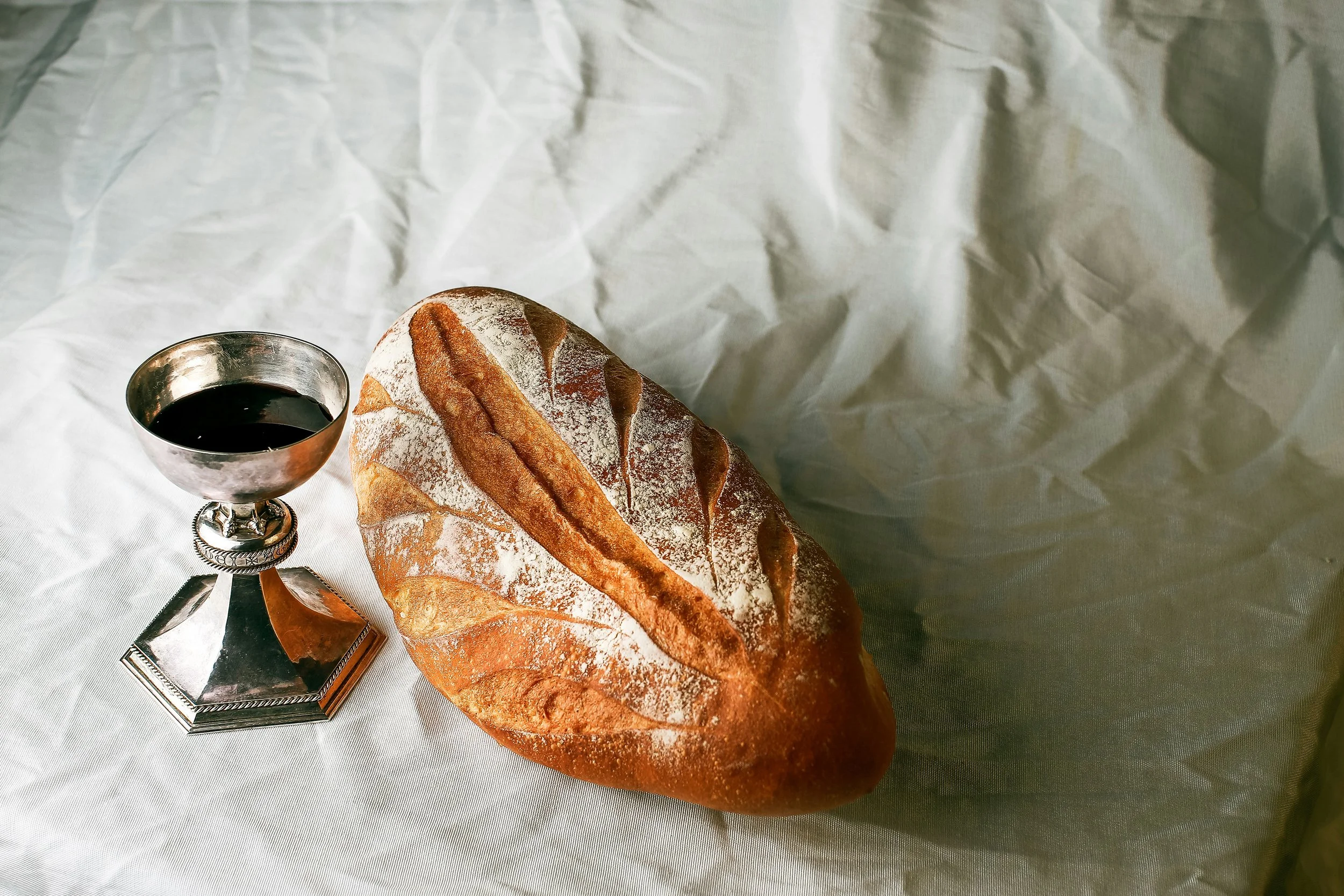
Few practices in the Christian life are as meaningful and as misunderstood as communion. Instituted by Jesus Himself (Luke 22:19), communion is also referred to as the Lord’s Supper or the Lord’s Table. It is one of the ordinances in the Christian church and is meant to anchor believers in the gospel as an act of remembrance and reflection. Yet both theological and practical confusion has distorted its meaning. If we want to approach the Lord’s Table in a way that honors Him, we must correct these common misconceptions with clarity and Scripture.
Misconception #1: “Anyone Can Take Communion”
In many churches, communion is treated as open to anyone present. But biblically, it is reserved for believers. In 1 Corinthians 11:27-29 Paul warns: “Therefore whoever eats the bread or drinks the cup of the Lord in an unworthy manner, shall be guilty of the body and the blood of the Lord. But a man must examine himself, and in so doing he is to eat of the bread and drink of the cup. For he who eats and drinks, eats and drinks judgment to himself if he does not judge the body rightly.” Nothing about Paul’s warning should make anyone feel like they have to be perfect to take communion, but they must be in Christ in order to participate. Communion is a covenant meal for those who belong to Him.
One practical way churches and their pastors can help people better understand this truth is to graciously explain who can and who cannot participate in communion. To invite unbelievers to partake without explanation or warning is not gracious, it is spiritually careless. The table is for those who have repented and believed the gospel.
Misconception #2: “Communion Is Necessary for Salvation”
This is one of the most serious doctrinal errors surrounding communion. In Roman Catholic theology, the Eucharist is placed within a broader sacramental system tied to salvation. The Catholic Catechism states, “The Church affirms that for believers the sacraments of the New Covenant are necessary for salvation.” And regarding the Eucharist specifically it says, “The Eucharist is ‘the source and summit of the Christian life.’” Additionally, Catholic teaching connects participation in the Eucharist with eternal life, drawing on John 6:54 (“He who eats My flesh and drinks My blood has eternal life”).
From a Protestant perspective, this framework goes beyond Scripture.
The Bible teaches that salvation is by grace alone through faith alone (Ephesians 2:8–9). The thief on the cross was saved without ever receiving communion (Luke 23:42–43). Communion is not a means of justification, but rather, it is a remembrance of the One who justifies. To require sacramental participation for salvation risks adding to the finished work of Christ (John 19:30).
Misconception #3: “The Bread and Wine Become Christ’s Body and Blood”
The doctrine of transubstantiation teaches that the elements literally become Christ’s body and blood. The Catholic Catechism 1413 states, “By the consecration the transubstantiation of the bread and wine into the Body and Blood of Christ is brought about. Under the consecrated species of bread and wine Christ himself, living and glorious, is present in a true, real, and substantial manner: his Body and his Blood, with his soul and his divinity.” But Scripture gives us no reason to interpret Jesus’ words this way. When He said, “This is My body,” He was speaking symbolically, just as He was when He said, “I am the door” (John 10:9). Communion is a memorial (Luke 22:19), not a re-materialization of Christ. Hebrews 10:14 makes clear that His sacrifice was offered “once for all.” The elements point to that finished work, and they do not recreate it.
Misconception #4: “Communion Re-Sacrifices Christ”
Closely related to the previous misconception is the idea that the Lord’s Supper is a repeated sacrifice. The Catholic Catechism teaches, “The Eucharist is thus a sacrifice because it re-presents (makes present) the sacrifice of the cross” (CCC, 1366). While Catholic theology will often try to carefully qualify this, the language itself creates confusion. Scripture emphasizes the finality of Christ’s work: “We have been sanctified through the offering of the body of Jesus Christ once for all” (Heb. 10:10). Communion does not continue or reapply the sacrifice; it proclaims it (1 Cor. 11:26).
The cross is not ongoing. When Jesus said, “It is finished,” it was indeed finished!
Misconception #5: “It’s Just a Ritual”
On the opposite extreme, many treat communion as routine, as though it’s a brief religious moment with little meaning. But Jesus commanded, “Do this in remembrance of Me” (Luke 22:19). Communion is a deliberate act of worship. Paul says that when we take it, we “proclaim the Lord’s death until He comes” (1 Cor. 11:26).
Communion is an intentional act of obedience to Christ and remembrance of Christ during which we reflect, worship, and rejoice in the gospel.
Misconception #6: “You Have to Be Perfect to Take It”
Some believers avoid communion because they feel unworthy. But the table is not for perfect people, it is for repentant people. Paul calls believers to “examine” themselves (1 Cor. 11:28), not to withdraw indefinitely. Only rampant, unrepentant sinners should feel conviction and fear about partaking. Church discipline actually prohibits people from coming to the Lord’s Table until they repent and turn course.
If perfection were required, no one would ever partake. Communion should lead to confession and renewed faith, not fear-driven avoidance.
Misconception #7: “How You Take It Doesn’t Matter”
Finally, some assume that participation alone is enough, or that how you take communion doesn’t really matter. First, let me just say that in some ways, there can be some allowable variance. For example, some churches might take the bread and wine/juice all at once, others (like ours) pray and take each element separately. Some leave people in their seats and serve the bread and wine/juice to the congregation. Others line up and come receive the bread and wine/juice from the elders. In all these things, the core principles of how the church is called to take communion are generally preserved. But this is not what I am referring to.
I remember attending a church many years ago (early in my conversion) that would just leave some juice and crackers in the back, play emotional music, and tell people, “If you want to take communion today just go back there, grab some juice and a cracker and do it as you feel led. For the rest of you if you’re heading out, we’ll see you next week!” It was as though it were a kind of ancillary product offered at the end of a show, not an ordinance the church takes seriously. There was no word on who should take it or who shouldn’t take it. No call for gospel remembrance. Just a casual, consumer-driven framework built on however people felt. But Scripture emphasizes the manner in which we take it.
The Corinthians were rebuked for treating the table casually and selfishly, and Paul says some became weak, sick, and even died (1 Cor. 11:30). Communion is sacred. It should be approached with reverence, unity, and self-examination.
In summary, we need to remember that communion is an important part of our worship.
It is not for everyone, but for believers.
It does not save, but points to salvation.
It is not Christ physically present, but Christ faithfully remembered.
It is not a repeated sacrifice, but a finished one proclaimed.
When rightly understood, the Lord’s Supper becomes what Jesus intended as a powerful, recurring reminder that our hope rests in what Christ has completed on the cross.