Christians You Should Know: William Carey
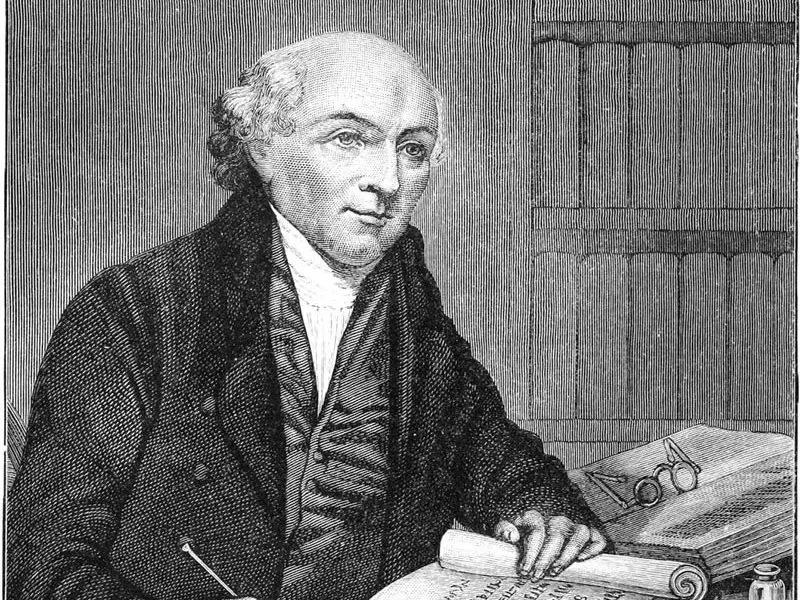
It was William Carey who once wrote: “I am not afraid of failure; I am afraid of succeeding at things that don’t matter.”
That sentence feels like a rebuke written for our age.
We live in a world obsessed with speed, platforms, metrics, and visible wins. Even in the church, success is often measured by attendance curves, social media reach, and how quickly something “works.” William Carey stands as a holy contradiction to all of it. His life reminds us that God’s definition of greatness is not urgency, visibility, or comfort, but faithful obedience over time, even when that obedience looks like failure.
Who Was William Carey? (A Brief Biography)
William Carey (1761–1834) was an English Baptist missionary, pastor, linguist, and social reformer, widely known as the father of modern missions. Born into poverty in rural England, Carey had little formal education. He worked as a shoemaker while pastoring a small church, teaching himself Latin, Greek, Hebrew, and several modern languages late into the night. In 1792, Carey published An Enquiry into the Obligations of Christians to Use Means for the Conversion of the Heathens, a book that challenged the prevailing belief that global missions were unnecessary or presumptuous. The following year, Carey and his family sailed to India. What awaited him was hardly revival, but great suffering.
Carey buried a young son in foreign soil. His wife, Dorothy, descended into severe mental illness. Financial support from England was sporadic. Carey lived in grinding poverty, often working secular jobs simply to survive. And for seven long years, he saw no converts.
Yet Carey stayed.
By the end of his life, Carey had translated Scripture into more than 30 languages and dialects, helped establish schools and printing presses, opposed deep-seated social evils, and inspired generations of missionaries who followed in his footsteps. Carey never became famous in his lifetime. But he was faithful.
Lesson 1: Faithfulness Often Looks Like Failure (At First)
Seven years.
That’s how long William Carey labored in India before seeing his first convert, but the number alone doesn’t tell the story. When Carey arrived in India in 1793, he entered a spiritual warzone. From disease, isolation, and hostility, to relentless discouragement, he faced it all. Within months, his young son Peter died of dysentery. Carey buried him with his own hands, far from home, without the comfort of extended family or community. His wife Dorothy never recovered from the trauma of leaving England and losing her child. She suffered severe mental illness, hallucinations, paranoia, uncontrollable outbursts. Carey would preach by day, translate Scripture by candlelight at night, and then sit helplessly as his wife unraveled beside him. On the financial front, support from England was inconsistent. Carey often lived near starvation. To survive, he took work managing an indigo factory, laboring long hours in harsh conditions, yet he continued translating Scripture before dawn and after dark.
And through it all: No converts. No revival. No encouraging reports. No visible fruit to justify the sacrifice.
For seven years, Carey preached Christ to people who listened politely, or not at all. Many people would have concluded they had misheard God or consider such a missionary effort a waste of time (and of a life!). But William only concluded that God was teaching him to trust.
Lesson 2: Patience is About Trusting God
Carey’s patience was a disciplined perseverance. He did wait on God but he not wait in idleness. He worked relentlessly while trusting God completely. Carey learned local languages, studied cultural customs, translated Scripture, educated children, and engaged daily with people who showed little interest in his message.
In his example we find that biblical patience is not apathy or sitting around passively, but rather, it is continued obedience sustained by hope. Carey’s life demonstrates that patience is the refusal to abandon God’s calling simply because it hurts or takes longer than expected. He was still driven and ambitious for gospel advancement, but trusted God even when things weren’t happening as fast as he might have hoped.
Lesson 3: The Gospel is Worth a Lifetime
Many Christian leaders today treat their ministry calling like a contract that is renewable only if the benefits outweigh the costs. But William Carey treated his calling like a covenant. He once wrote, “When I left England, my hope of India’s conversion was very strong; but among so many obstacles, it would die, unless upheld by God.” He clearly was not “trying out a little missions” or doing ministry so long as it was laced with commensurate benefits. He simple went to obey Christ.
There was no exit plan. No backup vision. No timeline for success. Carey believed that obedience to Christ did not come with a warranty of comfort, only with the promise of Christ’s presence.
Lesson 4: True Success is Eternal, Not Immediate
Carey’s most famous quote exposes our misplaced fears: “I am not afraid of failure; I am afraid of succeeding at things that don’t matter.”
He understood that it was possible to be outwardly successful and eternally barren. He feared that kind of misdirected achievement. And in this this lesson we find uncomfortable questions that must be asked of ourselves:
Are we measuring faithfulness or visibility?
Are we chasing fruit or applause?
Are we building God’s kingdom or our own?
Carey teaches us to fear the right thing. We must not failure, but a life spent on what does not last.
Lesson 5: Obedience Can Change More Than You’ll Ever See
When Carey finally saw fruit, it came quietly. His first convert, Krishna Pal, was baptized in 1800 after years of careful instruction. Carey wept openly over the faithfulness of God. Finally! A conversion. But Carey’s greatest impact extended far beyond those who were personally baptized by him. The gospel had infiltrated India and pagan practices would now be challenged as well.
One of the most horrific practices Carey encountered was “sati,” a ritual in which a widow was burned alive on her husband’s funeral pyre, often under intense social pressure. It was defended as religious devotion and protected by cultural custom. When learning of this, Carey was appalled and began documenting cases, translating legal texts, writing petitions, and lobbying British authorities relentlessly. After decades of effort, on December 4, 1829, the British Governor-General officially outlawed sati in India, due in no small part to Carey’s persistent advocacy. His application of Christian ethics to human suffering and paganism should be an inspiration to all of us!
Beyond India, Carey’s influence multiplied. His life and writings inspired men like Adoniram Judson, who would endure decades of suffering in Burma, and Luther Rice, who helped mobilize missionary support in America. Carey helped spark the modern missionary movement, leading to the formation of missionary societies that still exist today.
He also translated the Bible (or portions of it) into more than 30 languages and dialects, including Bengali, Sanskrit, and Hindi. Entire regions received Scripture for the first time because one man refused to quit. Many who read Carey’s translations would never know his name. Carey was content with that. At one point, Carey’s entire printing operation burned to the ground resulting in years of labor lost overnight. When a friend tried to console him, Carey reportedly replied, “The loss is heavy, but God’s cause will go on.” He began again the next morning.
His exemplary life reminds us that even if we don’t live to see the extent of our impact, there is no greater peace and no greater privilege than knowing that God will be glorified through our gospel efforts. We simply aim to be faithful and trust Him with the results.